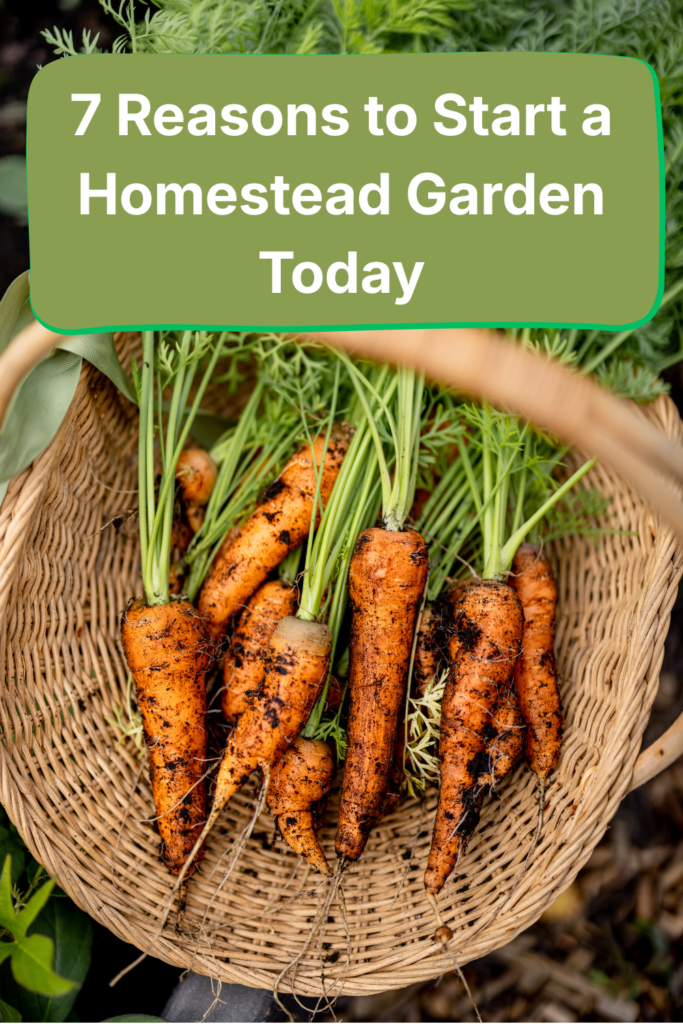
You do not need acres of land, expensive tools, or years of gardening experience to start a homestead garden.
For many beginners, the word “homestead” sounds big and intimidating, but it can begin with something as simple as a few pots of herbs, a small raised bed, or a sunny corner of your backyard. A homestead garden is really about growing more of your own food, learning useful skills, and becoming a little more self-reliant one season at a time.
In this post, we’ll look at seven practical reasons why starting a homestead garden is worth it, especially if you’re just beginning.
#1 You Can Grow Fresher, Better-Tasting Food
One of the best reasons to start a homestead garden is the taste. Food picked fresh from your own garden often has more flavor than food that has been harvested early, shipped, and stored before reaching the grocery store.
Even a small garden can make a big difference. A few tomato plants, fresh herbs, lettuce, peppers, or strawberries can bring more freshness to everyday meals. You do not need to grow everything you eat to enjoy the benefit.
A homestead garden also gives you more control over what you grow and how you grow it. You can choose the vegetables your family actually likes, pick them when they are ripe, and bring them straight to the kitchen.
For beginners, this is a simple but powerful place to start. One fresh salad, one handful of herbs, or one ripe tomato from your own garden can show you why growing your own food is worth it.
#2 You become less dependent on grocery stores
A homestead garden gives you something valuable: a little more control. Not total independence overnight. Not a full pantry from one raised bed. But a real step away from depending on the grocery store for every fresh thing your family eats.
When you can walk outside and pick part of dinner, something shifts. You are no longer waiting on:
- whatever produce the store has in stock
- prices that seem to change every week
- vegetables that were picked too early
- herbs that cost too much for one small bundle
- food that may already be wilted by the time you bring it home
Instead, you have something growing close to you. Maybe it is just lettuce at first. Maybe it is a few tomatoes, green onions, basil, or peppers. That still matters.
For beginners, this is the heart of homestead gardening. You are not trying to replace the entire grocery store in one season. You are learning how to provide a small part of your own food, then building from there.
And over time, those small harvests add up. A handful of herbs means one less thing to buy. A few fresh greens mean a quick salad without a store trip. Extra tomatoes can become sauce, salsa, or something saved for later.
#3 You Can Save Money Over Time
Growing food at home can lower grocery costs, especially when you plant things your family already buys often.
Fresh herbs, lettuce, tomatoes, peppers, green onions, and cucumbers can get expensive at the store. One seed packet or healthy plant can give you several harvests through the season. It will not remove the grocery bill completely, but it can make it lighter.
The biggest savings come from growing food you actually use. Basil for weekly meals, lettuce for salads, tomatoes for snacks or sauces, peppers for cooking – small harvests like these can add up over time.
#4 You Learn Useful Self-Sufficiency Skills
When you grow a garden, it teaches you practical skills that you can use for years.
You learn how to plant seeds, improve soil, water correctly, manage pests, compost scraps, and harvest food at the right time. These are simple lessons, but they make you more capable at home.
You also start understanding what your family eats, what grows well in your area, and how to make better use of your space.
Helpful skills you can learn include:
- starting seeds indoors
- growing herbs and vegetables
- composting kitchen scraps
- saving seeds from healthy plants
- preserving extra food
- reusing containers and garden materials
These skills do not require a perfect setup. They come from practice. Each season teaches you something new, and over time, you become more confident growing and using your own food.
#5 You Reduce Waste and Live More Sustainably
Growing food at home helps you see waste differently. When you care for a plant from seed to harvest, you are less likely to throw food away without thinking. You know the time, water, soil, and effort it took to grow it. Even a small harvest starts to feel more valuable.
A garden also gives everyday scraps a second use. Vegetable peels, fruit scraps, coffee grounds, dry leaves, and old plants can become compost instead of going straight into the trash. That compost can feed the soil, and the soil can feed the next round of plants.
That is one of the best parts of gardening: what looks like waste can often become part of the next harvest.
It also helps reduce some of the packaging and transport that comes with store-bought produce. A tomato from your backyard does not need a plastic container, a produce sticker, or a long trip before it reaches your plate. You may still shop at the grocery store. That is normal.
But every bit of food you grow at home is a small move toward a more thoughtful, less wasteful way of living.
#6 You Improve Your Physical and Mental Health
Your health can improve in more than one way when a garden becomes part of daily life.
First, it gets you outside. More fresh air, more sunlight, more time away from screens. Then comes the movement. Planting, watering, weeding, harvesting, carrying soil, and checking on plants all keep your body active in a gentle, practical way.
The food side matters too. When vegetables and herbs are close by, you are more likely to add them to meals. A few fresh greens, tomatoes, peppers, or herbs can make healthy eating feel easier.
And mentally, the garden gives your mind a place to rest. There is something calming about focusing on one simple task: watering a row, pulling weeds, picking what is ready, noticing new growth. It slows the day down.
So this benefit is simple:
- more movement
- more time outdoors
- fresher food
- less stress
- a calmer daily rhythm
#7 You Create a More Meaningful Home Life
Home starts to feel different when it becomes a place that provides something. A garden can turn an ordinary yard, patio, or small corner into a space with purpose.
It is not just empty ground anymore. It becomes a place where food grows, where family members gather, where children learn, and where daily routines feel more connected.
There is meaning in simple things:
- picking herbs before dinner
- checking tomato plants in the morning
- teaching kids where food comes from
- sharing extra vegetables with a neighbor
- making a meal with something you grew yourself
These moments are small, but they make home feel more alive.
Homestead gardens are not only about food. It is about building a lifestyle where your home does more than shelter you. It feeds you, teaches you, slows you down, and gives you something useful to care for.
Final Thoughts
Starting a homestead garden does not have to be big, expensive, or complicated. You can begin with a few containers, one raised bed, or a small sunny spot and grow from there.
Over time, even a small garden can bring fresh food, useful skills, lower grocery costs, less waste, and a stronger connection to your home. Start with what your family will actually eat, learn as you go, and let each season teach you something new.
No comments yet. Be the first to share your thoughts!